Cabernet Sauvignon is the alpha, the big dog. Many people say, "Cab is king." They're not wrong. Cabernet Sauvignon is a dominant force in the wine industry and the most popular choice among US wine consumers. Not hard to see why.
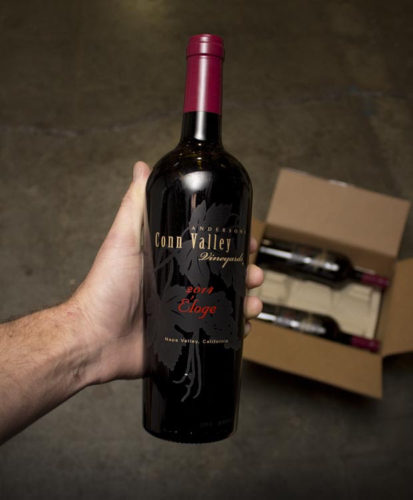
Cabernet is a perennial favorite here at Last Bottle, thanks to its generous fruit, long aging potential, and depth of character.
Early Origins
Cabernet Sauvignon originated in the Bordeaux region of France in the 1600s. Eventually, researchers at UC Davis concluded that it was created by crossing Cabernet Franc and Sauvignon Blanc. Whether this happened intentionally or by chance is still debated. What’s not up for debate is the resounding success of the result.
Cabernet has long been the headlining grape of Bordeaux, where it thrives — especially in the gravelly soils of the Left Bank. It’s relatively easy to grow, with thick skins, a strong tannic backbone, ample fruit, and the ability to age gracefully for decades. Time in oak adds layers of secondary flavors and aromas, further enhancing its complexity. In short, it’s a well-endowed wine.
Soon after establishing itself in Bordeaux, winemakers began blending Cabernet Sauvignon with Cabernet Franc, Merlot, Petit Verdot, and Malbec, giving birth to the iconic Bordeaux blend.
New World and Old World Styles
As one of the most widely planted grapes in the world, Cabernet Sauvignon appears in a wide range of styles — a major reason for its enduring appeal. From fresh, lightly oaked bottlings to super-extracted wines dripping in sweet oak, there’s a Cabernet for nearly every palate.
Broadly speaking, these styles fall into New World and Old World categories. New World Cabernet is typically riper, with more pronounced fruit and softer tannins. It’s more approachable upon release and is commonly associated with warmer regions like California. That said, many Bordeaux producers now use modern techniques to craft polished, rich, and ripe wines as well.
Old World Cabernet leans more rustic, where ripe fruit takes a back seat to savory notes like charcoal, slate, green pepper, and earth. This style is usually linked to cooler climates such as Bordeaux, though winemakers always have some influence over the final expression.
California’s Rise to Cabernet Stardom
Today, California’s reputation for producing outstanding Cabernet Sauvignon is unquestioned. But for decades, its wines were dismissed as inferior — better suited to jug wine and immediate consumption than serious cellaring.
Then came the Judgment of Paris.
In 1976, a 1973 Stag’s Leap Wine Cellars Cabernet Sauvignon took first place in a blind tasting organized by Steven Spurrier, outperforming top classified Bordeaux wines. The world began taking California wine seriously overnight. Other California producers, including Ridge Monte Bello, Mayacamas, Heitz, and Clos du Val, also performed impressively against elite Bordeaux estates like Haut-Brion, Lafite, and Montrose.
Today, California Cabernet exemplifies the New World style — lush, ripe fruit, softer tannins, and early approachability, while still possessing the ability to age beautifully for decades. In Napa Valley, where Cabernet is the most widely planted grape, it also commands the highest prices, sometimes exceeding $20,000 per ton.
Cabernet Sauvignon versus Merlot
These two popular grapes are often confused by newcomers, and while they share some similarities, they’re quite different in character. Cabernet Sauvignon is more assertive, structured, and tannic. Merlot, by contrast, is softer and plusher, with gentler tannins, more generous fruit, and a stronger cocoa-driven profile.
Cabernet is typically drier than Merlot, which is often perceived as slightly sweeter. Cabernet is not always a beginner-friendly wine — its boldness can be intimidating, and inexpensive examples often fail to show the grape at its best, leaving a poor first impression.
In the Glass
Cabernet Sauvignon is a full-bodied red wine with moderate acidity and exceptional aging potential. Common primary flavors include black cherry, blackcurrant, vanilla, tobacco, leather, and black pepper. Secondary notes may reveal oak, olive, plum, mushroom, and red currant.
One particularly distinctive characteristic of Cabernet is green bell pepper — a flavor derived from pyrazines in the grape. These compounds vary with ripeness but are usually present to some degree. Cabernet from cooler regions, such as Bordeaux, tends to show more pronounced vegetal notes. Some producers, like Napa’s Heitz Cellars, are known for minty or eucalyptus nuances — a less common but memorable trait also found in places like Pauillac and parts of Washington State.
Where it Grows
While France gave birth to Cabernet Sauvignon, many regions around the world now claim it as their star. In Italy, Cabernet plays a key role in Super Tuscan wines alongside Sangiovese and Cabernet Franc. In Spain, it’s often blended with Tempranillo. Chile produces excellent fresh, fruit-forward examples, and California remains the benchmark for New World Cabernet.
Over the past few decades, Cabernet Sauvignon has risen to become the most planted grape variety in the world, with more than 650,000 acres under vine globally. France, Chile, the United States, Australia, Italy, South Africa, and Argentina hold the largest plantings.
Cabernet thrives in warmer climates and requires a long growing season due to its late ripening. California offers ideal conditions, with abundant sunshine and minimal rainfall. Outside the U.S., some of the most sought-after examples still come from Bordeaux’s Left Bank, where cooler, less predictable weather often results in wines with higher acidity and less overt ripeness.
Cabernet Sauvignon is also growing rapidly in Argentina, Chile, and New Zealand — prized not only for consumer demand, but for its adaptability across climates and its compatibility with vineyards growing multiple varietals.
Food Pairing
Cabernet Sauvignon and food go together like a ’64 Impala and hydraulics. It’s an exceptionally food-friendly wine, especially with fatty meats, where tannins bind beautifully with richness. Think filet mignon, sirloin, burgers, short ribs, lasagna, and bolognese. It also pairs well with salami and aged cheeses like cheddar or Gouda.
Great Cabernets Worth Seeking Out
-
-
Château Montelena — Napa Valley, California
-
Clarendon Hills — McLaren Vale, Australia
-
Kendall-Jackson — Alexander Valley, California
-
Barnard Griffin — Columbia Valley, Washington
-
Château Margaux — Bordeaux, France
-