Pinot Noir is the supermodel of wine grapes. Often described as “sensual,” it’s admired by critics and consumers worldwide. It has inspired festivals, earned a song from Titus Burgess, won the devotion of Paul Giamatti’s character in Sideways, and even fueled the late Greg Walter’s entire wine blog. Pinot stands apart from its bigger, brawnier noble grape relatives. It’s lighter in color, with low to moderate tannins and crisp acidity. Yet Pinot Noir is endowed in all the right ways — a rich core of fruit, brilliant aromatics, and unraveling layers of complexity that keep you coming back for another taste.
A Challenging Grape
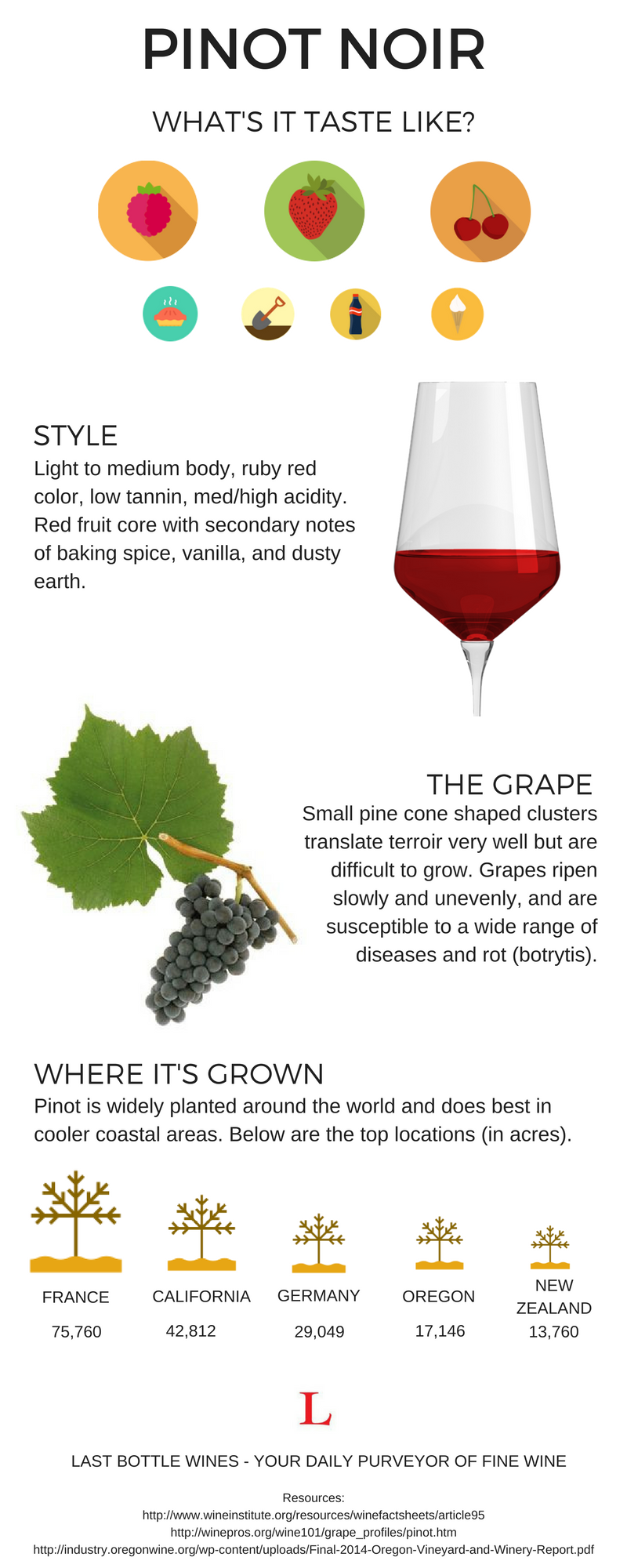
Pinot Noir means “pine cone” in French, a nod to the tight, compact shape of its grape clusters. There’s no question that Pinot Noir is one of the most difficult grapes to grow. It thrives in cooler climates, where foggy mornings gradually give way to warm sunshine before chilly nights return.
It’s often the first vine to bud each year, making it especially vulnerable to spring frosts. Pinot Noir is also prone to nearly every vineyard ailment imaginable. Its vines have thinner leaf coverage than many other varieties, leaving the berries exposed to birds. The fruit tends to ripen slowly and unevenly, and once ripe, the thin skins can shrivel quickly, making the grapes susceptible to botrytis.
Even in the winery, Pinot presents challenges. It can be difficult to manage during fermentation, which often happens rapidly and can boil over if not carefully controlled.
Despite these hurdles, when conditions align, few grapes translate terroir as vividly as Pinot Noir. Patient, skilled growers are rewarded with wines of remarkable expressiveness — elegant, nuanced, and unlike any other varietal.
The “Sideways effect” only cemented Pinot Noir’s place in popular culture. After Miles famously praised Pinot in the film, supermarket sales of the grape reportedly jumped by 18 percent the following year.
Pinot Noir At-a-Glance
Where it Grows
Burgundy
For many serious wine enthusiasts, Burgundy is synonymous with Pinot Noir. Producers here rarely label their wines as Pinot Noir, instead calling them “Red Burgundy.” In this region, it’s all about terroir, the rolling, limestone-rich hills that imbue the grapes with a distinctly Burgundian sense of place. These legendary vineyards consistently produce the most expressive examples of Pinot Noir, capable of aging gracefully for 10 to 20 years.
Burgundy’s Grand Cru vineyards are the pinnacle, offering exceptional complexity and commanding the highest prices. Premier Cru sites strike a balance, delivering excellent quality at a more accessible value. At the Bourgogne level, the wines are more variable and less predictable.
In general, Burgundy Pinot Noir shows bright red fruit (think cherry, raspberry, and cranberry) layered with dusty forest floor, tobacco, and subtle floral notes. Historically, this leaner style also carried earthy, funky aromas — barnyard, manure, wet leaves, and mushrooms. As consumer preferences shifted, many producers embraced a more modern style, highlighting vibrant fruit while toning down the funk.
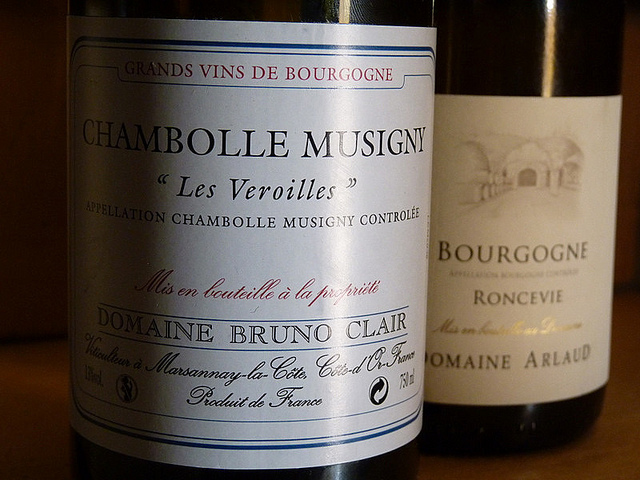 Red Burgundy is among the most prized wines in the world (Credit).
Because of Burgundy’s unpredictable weather, the region is highly vintage-dependent, and the quality can vary dramatically from year to year. Since the exceptional 2005 vintage, many years have fallen short of expectations, though 2015 is widely regarded as one of the best in recent memory. Top Grand Cru wines can fetch astronomical prices, but if money is no object, look for Grand Crus from Nuits-Saint-Georges, Gevrey-Chambertin, Morey-Saint-Denis, Chambolle-Musigny, Vougeot, Flagey-Échézeaux, Vosne-Romanée, and Aloxe-Corton.
For Burgundy style without the price, more affordable Pinot Noir can be found in the Loire Valley (where it’s labeled Sancerre Rouge) or from the Jura region. Another option is Beaujolais, where the Gamay grape produces a similarly light-bodied, fruit-forward red. For the best quality, seek out a Cru Beaujolais, which stands apart from the simpler, mass-produced Beaujolais Nouveau.
California
While Burgundy gave birth to Pinot Noir, California helped shape it into a modern classic. Compared to Burgundy, California Pinot is often riper and more lush, with higher alcohol levels and softer acidity. Expect a core of juicy cherry and raspberry, complemented by bright strawberry notes, vanilla, baking spices, cola, and subtle sweet-earth undertones on the finish. Pinot Noir has firm roots in Sonoma, including popular spots like Carneros, Alexander Valley, and Russian River Valley. The St. Rita Hills and Santa Lucia Highlands in the Central Coast have been pumping out some excellent examples too.
Oregon
In Oregon, a slightly cooler climate produces a more restrained style of Pinot Noir that bridges the gap between California’s lush expressions and Burgundy’s earthy, rustic profile. Oregon Pinot is known for soft red fruit flavors — Bing cherry, cranberry, and red raspberry — complemented by truffle and subtle earthy mineral notes. Its cooler climate also gives the wines slightly higher acidity.
Most plantings are found in the Willamette Valley, which shares a similar latitude with Burgundy and offers ideal conditions for Pinot Noir, thanks to cool temperatures and sediment-rich soils. Oregon Pinot Noir tends to age gracefully, often showing its best character three to five years after release.
New Zealand
New Zealand has seen remarkable growth in Pinot Noir production, which now ranks second only to Sauvignon Blanc in the country. Once criticized for thin, watery, and overly acidic wines, modern winemaking techniques and a deeper understanding of site selection have allowed New Zealand producers to craft world-class Pinot Noir.
Most plantings are in Marlborough, where clay-rich soils in the Wairau Valley produce excellent value-driven wines. However, the country’s finest examples come from Central Otago, where dramatic landscapes and ideal growing conditions yield ripe, floral Pinot with broad appeal.
Germany
Germany is the world’s third-largest producer of Pinot Noir, known locally as Spätburgunder. While you might not often encounter it on wine lists or store shelves, the better examples are remarkable — capable of impressing even seasoned Burgundy enthusiasts. Expect vibrant red fruit, including raspberry and cherry, with earthy undertones and the elegance and complexity typical of top-tier Pinot Noir.
Most German Pinot comes from the Ahr region, which accounts for roughly half of the country’s production. Other notable areas include Rheinhessen, Baden, and Pfalz.
Don’t forget Austria: Across the border, Austrian Pinot Noir goes by the name Blauburgunder and is worth seeking out for fans of German-style Pinot.
Chile
Chile offers some of the world’s most undervalued Pinot Noir, which is great news for Pinotphiles. The country’s long Pacific coastline creates an ideal climate for this finicky grape. Skilled winemakers have been refining their techniques, producing increasingly polished and accessible wines. Look for bottles from the Maipo, Central, and Aconcagua Valleys for excellent examples.
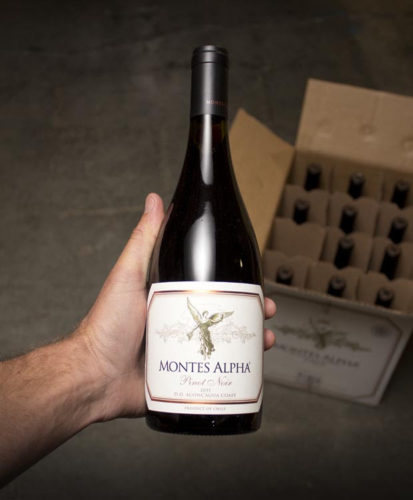
Montes Alpha offers this elegant and balanced rendition of Pinot Noir, boasting a big fruit profile and tons of spice.
Pairing Pinot Noir with Food
Pinot Noir makes for one of the most versatile and food-friendly wines out there. It pairs nicely with a huge range of options, from grilled meats to fish and pasta dishes. Think lamb kabobs, duck confit, prime rib, roasted chicken, or grilled salmon. Anything with mushrooms does very well too.
Salmon
Enjoy this simple baked honey garlic butter salmon with a fruity New World Pinot. The fat from the salmon plays nicely with the acidity and fruit in Pinot Noir.
Chicken Marsala
The acidity of Pinot Noir cuts through the creamy richness in this chicken marsala recipe, while the mushrooms perfectly compliment the earthy side of Pinot Noir.
Boeuf Bourgignon
Assuming you have the time and patience, you simply can't go wrong with this classic French dish that Julia Child dialed in. Check out this recipe for the mouthwatering details.