Here’s a fun experiment. Next time you grab a bottle of Riesling, pick up a few extras. Then tuck them somewhere dark and cool for 10–15 years.
Yes, really — but remember, not all white wine is made for aging. Pop one open every couple of years and watch it evolve. With patience, a young, zippy Riesling — all bright minerality and subtle stone fruit — can transform completely, like a caterpillar turning into a butterfly. Over a decade, it develops new aromas, richer flavors, and a complexity that feels like an entirely different wine.
Age This, Not That
Don’t go sticking your average Sauvignon Blanc or Chardonnay in the cellar for ten years. Age-worthy whites need the right combination: bold fruit, solid alcohol, and some mix of high acidity, sugar, and sometimes tannin.
Storage matters, too. Large swings in temperature or exposure to light will wreck their potential. Whites should be kept cooler than reds, ideally around 50°F, especially if you’re planning to leave them for a decade or more.
The payoff? Opening a mature Riesling is like discovering a whole new wine you never knew existed, bright, balanced, and utterly captivating.
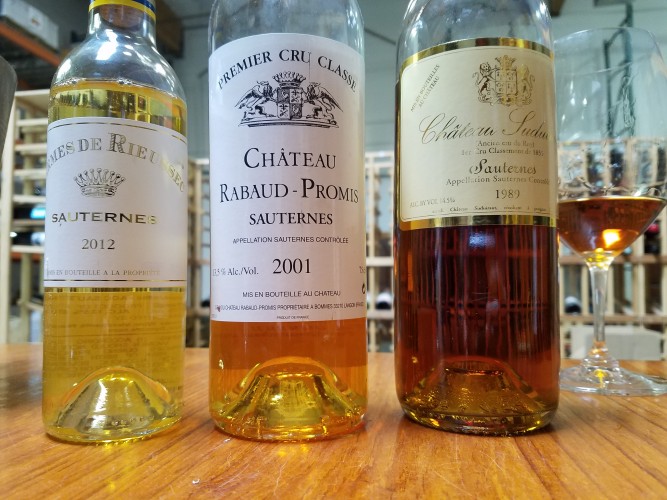 20+ years can turn a bright yellow Sauternes into something resembling whiskey.
Color
A young white wine often pours a bright yellow, almost glowing in the glass. Over time, that brightness deepens into a darker, honeyed yellow. If there’s a decent amount of residual sugar, like in Sauternes, it can even take on brownish tones as phenolic compounds oxidize and sugars begin to caramelize.
Flavor
Those bright, primary fruit flavors start to step back after a few years. Fresh pear becomes poached pear, and zesty lemon transforms into something like lemon meringue. Meanwhile, a host of rich secondary flavors emerge, from honeysuckle and petrol to caramel and toasted hazelnut, adding depth and roundness you won’t find in a young wine.
Aroma
Some whites, such as a Mosel Riesling, start out almost mute in the nose, delicate and subtle. Give them time, and they develop much more layered aromatics: stone fruit, honey, straw, beeswax, and darker, earthier notes like truffles and roasted coffee.
10 Great White Wines to Age
Chenin Blanc
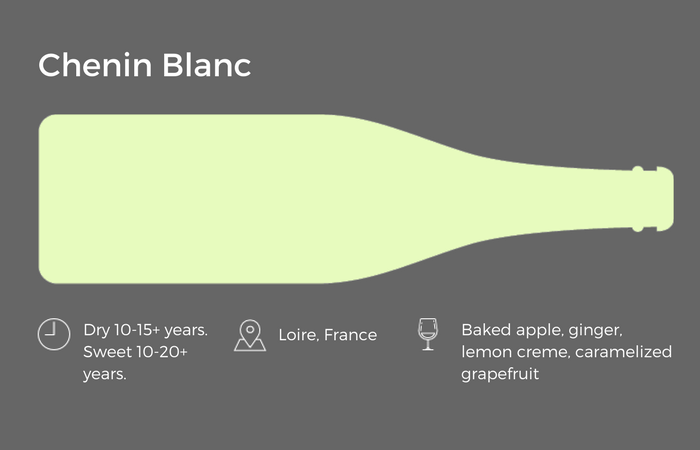
Certain Chenin Blancs are built for the cellar. Vouvray from the Touraine region and its more intense sibling, Savennières from the Anjou of the Loire Valley, are excellent picks. Savennières often brings high alcohol and high acidity, two key ingredients for long-term aging.
Dry Chenin Blancs can rest quietly for 10 years, while sweeter Vouvray Moelleux can easily last for decades, sometimes a lifetime.
White Bordeaux
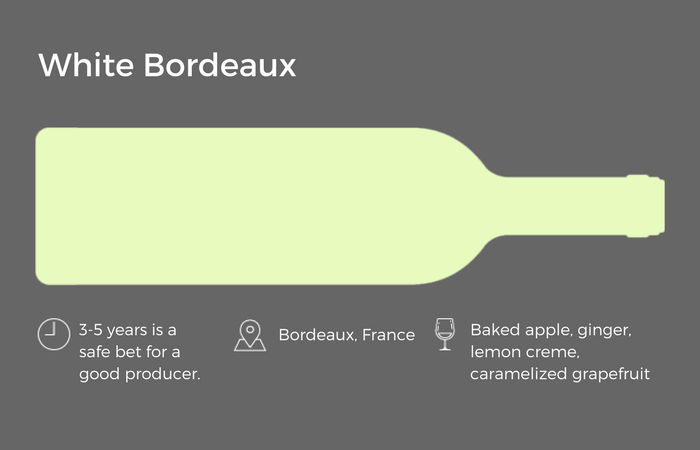
White Bordeaux is typically a blend of Sémillon and Sauvignon Blanc, sometimes with a touch of Muscadelle or Sauvignon Gris. Many are aged in oak, which adds phenolic compounds that help the wine age gracefully.
Stick to higher-end producers from Pessac-Léognan, which often hit their stride after 3–5 years. The very best examples can age beautifully for decades. Some collectors of Château Haut-Brion even argue that Haut-Brion Blanc outlasts their First Growth reds.
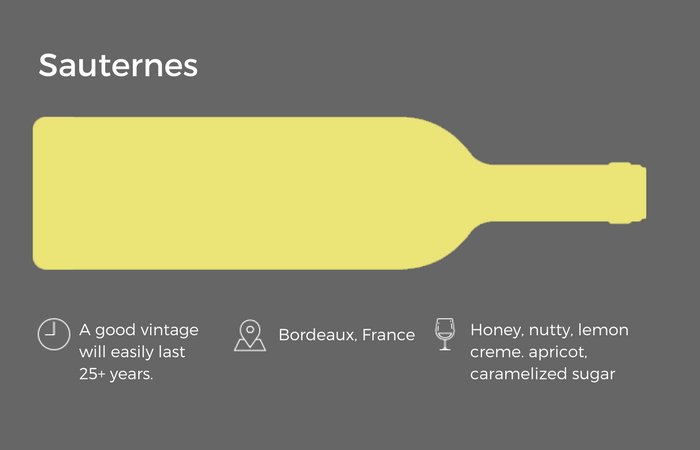
Sauternes
If you want something to gift a grandchild, Sauternes might be your best bet. The best vintages bring high acid and sugar along with low water content and unique acids from the botrytized grapes. They can last many, many decades. Expect more focused honey, nutty, and sweet lemon creme flavors to stand out with age.
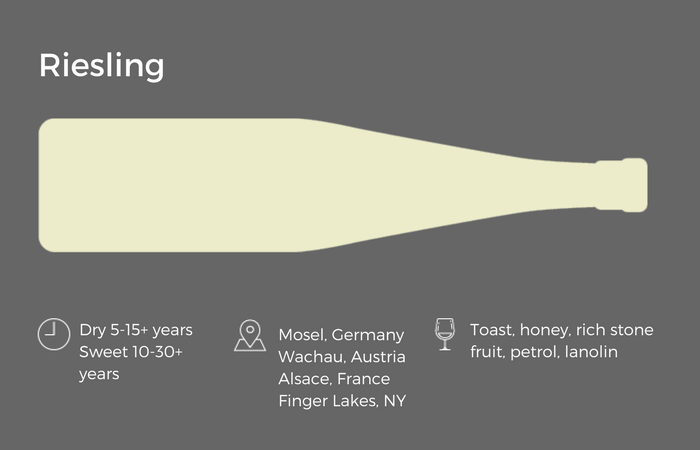
Riesling
Riesling makes a strong case for offering the most dynamic and interesting evolution with time. Thanks to its bright acidity, a quality dry version can rest easy for 10-20 years or more, while an off-dry or sweet Riesling can easily push 20-30 or more years. One of the most unique aspects of an aged Riesling is the development of a petroleum-kerosene note that some people absolutely love.
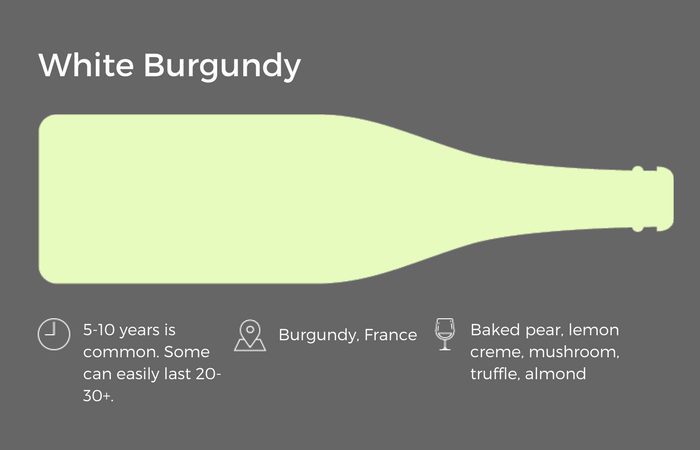
White Burgundy
Most New World Chardonnay is at its best when young, bright, fruity, and ready to enjoy. White Burgundy, on the other hand, is a whole different story. Give it 5–10 years, and it can enter an entirely new dimension. Some enthusiasts even wait 20–30 or more years, though oxidation can become a concern with extreme aging.
For longevity, target Premier Cru and Grand Cru bottlings. Focus on the Côte de Beaune and Chablis. Chablis, with its colder climate and limestone soils, produces wines with rippling acidity and briny minerality that defy time. Meanwhile, Côte de Beaune villages like Meursault, Chassagne-Montrachet, and Puligny-Montrachet yield a fleshy, creamy style, thanks to warmer weather and oak aging.
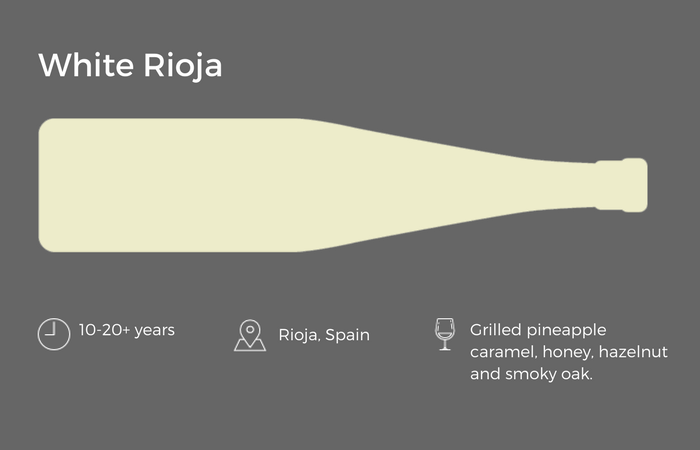
White Rioja
This is some geeky stuff. White Rioja is traditionally known for its old-school, oxidative style that makes it sort of an acquired taste. It only accounts for 10% of Rioja's production, so it's not exactly easy to find. It's made from Viura and Malvasia. These wines follow the same strict classification sytem of Rioja, and a Grand Reserva Rioja Blanca spends around six months in oak and four years aging. It shows a drastically different side compared to its unoaked, made-for-early-enjoyment "Joven" sibling. These wines are known for developing lots of nutty and oxidative flavors of grilled pineapple, caramel, honey, hazelnut, and smoky oak.
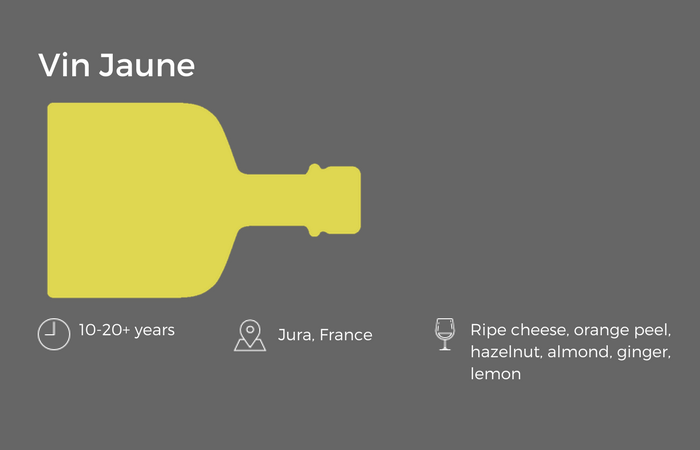
Vin Jaune
Here’s one for the adventurous types. From the remote, tiny Jura region in France comes Vin Jaune.
Like White Rioja, it ranks high on the geeky, hipster, sommelier-swigging scale. You might not want to serve this to your Chardonnay-loving mother-in-law (or maybe you do).
Vin Jaune is made from Savagnin grapes and vinified in an oxidative style for a minimum of six years. After bottling, it can stay fresh for 10–20 years or even longer.
The wine comes in a squat 620ml bottle, which represents the amount of fermented wine left from a liter of pressed juice. The deep yellow liquid delivers bold, nutty aromas, with flavors that are nutty, maple syrup–like, and spiced with curry-like notes. And yet, despite all that intensity, it remains bone-dry with lively acidity, a true one-of-a-kind experience.
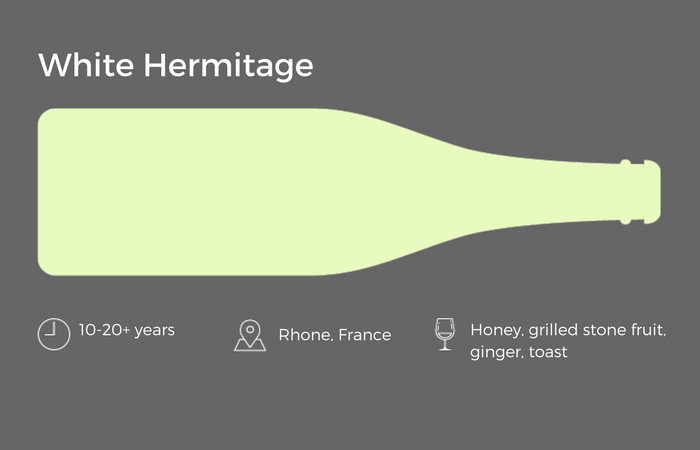
White Hermitage
When you hear Rhône, you probably think red wine — and for good reason. Regions like Châteauneuf-du-Pape, Cornas, and Côte-Rôtie have made a name for themselves with powerful reds.
But white Rhône wines can age beautifully too, and one stands out as the obvious collector’s choice: White Hermitage. A favorite of Thomas Jefferson, it comes from the steep hills of the northern Rhône, where Marsanne and Roussanne join forces to create a massive, full-bodied white.
Give it time in the bottle, and it transforms. Young, it’s rich and structured; mature, it reveals fleshy layers of pineapple, apricot, and honey-drizzled toast, showing why it’s one of the most rewarding whites from the region.
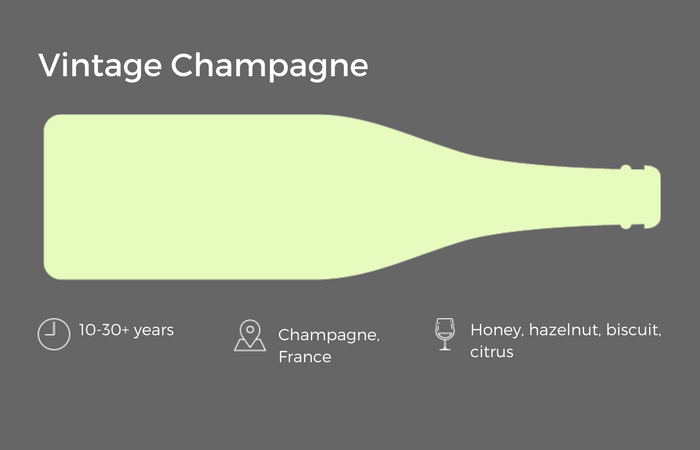
Vintage Champagne
A great vintage Champagne is worth cellaring for decades. Non-vintage bubbles might not last as long because they include grapes from different years, so the uniformity just isn't quite there. The high acidity of Champagne helps, but so does carbon dioxide, which acts as a natural preservative. Many producers will hold onto old vintages, releasing them periodically over the years. The absolute best vineyards go toward Prestige Cuvées, which need around 15 years of aging to really hit their stride.
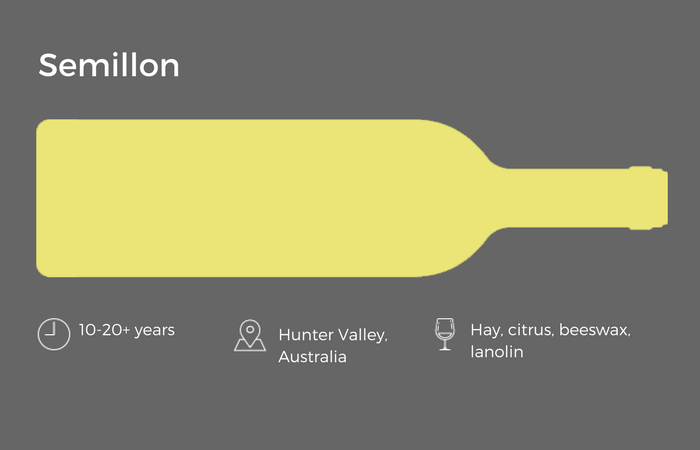
Semillon
Australia’s Hunter Valley is ground zero for age-worthy Semillon. Young bottles often show low alcohol and timid aromas of grass and fig, but give them time, and they can blossom into something extraordinary. With age, these wines reveal layers of beeswax, lanolin, tobacco leaf, and cigar wrapper.
In today’s world of instant gratification, it’s easy to skip the waiting game. We get it. Many aged whites have a geeky side that some people adore and others just don’t understand.
Most whites probably shouldn’t sit in your cellar for decades, but if you can stash a few extra bottles and exercise some patience, the payoff can be remarkable. The hardest part is storing up enough patience.