


Some things don’t get better with age, like milk, tuna casserole, and, yes, Ernest Goes to Camp movies. Wine, thankfully, is very different. Properly aged wine can deliver a deeply rewarding tasting experience, but for the casual drinker, questions often arise: Which wines are worth stashing? How should they be stored? Do you need to spend a fortune? When is the right moment to pop the cork? And most importantly, what really happens as wine ages?
The average consumer wants something enjoyable right away, not a wine with a drinking window a decade down the line. But if you’re curious, and have the space, it’s worth stashing a few bottles as a personal experiment to watch how they evolve over time.
What Does Wine Need to Age Well?
A few key components give wine the staying power to improve with age:
Acidity – High acid levels help preserve wine over time. That’s why wines like Barolo, Brunello, Riesling, and Chenin Blanc age so gracefully.
Tannins – Particularly important in reds, tannins come from grape skins and seeds. They’re part of a larger group of phenolic compounds that influence taste, color, and mouthfeel. Wines like Cabernet, Syrah, and Nebbiolo have high tannin and phenolic content, which lends structure and longevity.
Other factors include sugar content, grape variety, vintage, and storage conditions. All of these contribute to how a wine will change — or hold up — over the years.
How Does Aging Affect Wine?
Wine evolves in fascinating ways. Flavors shift, textures soften, and colors transform. Take Barolo, for example:
-
When young: The fruit is often restrained, tannins are gritty, and oak can feel overpowering. The wine may seem unbalanced or harsh.
-
After a few years: The oak melds with the fruit, tannins soften, and the wine feels more harmonious.
-
A decade or more: The bright fruit shifts toward stewed notes, savory flavors like earth, mushroom, leather, and spice emerge, and the tannins have largely faded. The deep garnet color gradually takes on a brick-orange hue—a hallmark of aged Barolo.
Whether you enjoy a 10+ year-old wine is entirely personal. Eventually, all wines reach a point where fruit disappears, structure collapses, and the wine becomes a shadow of its former self. But until that moment, the journey of aging can be endlessly rewarding.
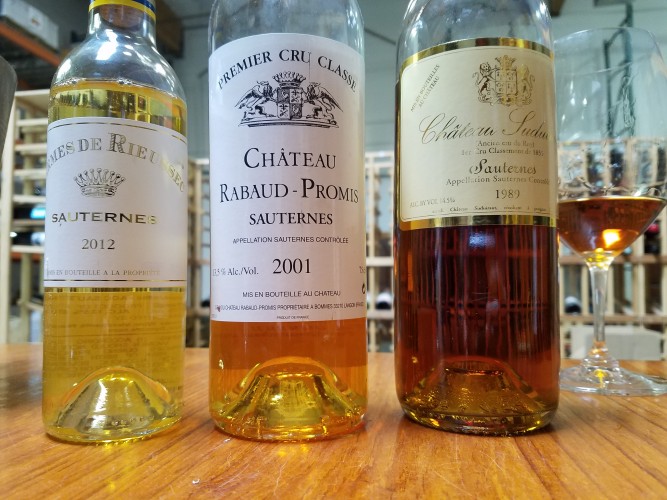 Three bottles of Sauternes show just how dramatically color can change over time, from bright yellow to golden to a syrupy brown. The darker color comes from oxidation over time.
You might think white wines don't age as well as reds. In a sense, that's true. However, whites with high acidity like Semillon, Chenin Blanc, Sancerre, White Burgundy, and Riesling can all age extremely well, even quite a bit longer than some reds. Unlike red wine, which loses its color, white wines darken with age, turning from bright yellow to a deeper gold or later even brownish tint. Fresh fruit flavors turn honeyed, and a pronounced nuttiness emerges.
How Long Can Some Wines Age?
Wine can age for surprisingly long periods, depending on the varietal and how it’s stored. Riesling, for example, is one of the most capable white wines for aging. Its high acidity and sugar content provide a strong foundation that allows it to develop over many years. Even an affordable $15 bottle can become an impressive addition to a long-term collection if it has enough acidity. Chenin Blanc, particularly Vouvray, is another white with exceptional aging potential. Bottlings with a touch of sweetness, such as demi-sec or moelleux, can remain drinkable for decades, with some Savennières even lasting a lifetime.
Among reds, Cabernet Sauvignon commands immense respect for its aging ability. Old Bordeaux from a great vintage is a classic example, and esteemed Napa Cabs from producers like Ridge, Heitz, Corison, Dunn, and Diamond Creek can also develop beautifully over decades. Pinot Noir, especially from Burgundy, often requires years of aging to reach its full potential. Some can last for decades before declining, while certain California Pinots can also hold up well, depending on acidity levels. Nebbiolo, the grape behind Barolo and Barbaresco, is famously harsh in its youth due to firm tannins, but these same tannins allow it to evolve gracefully over many years. Rioja, particularly Gran Reserva, combines a robust Tempranillo backbone with extended aging in barrel and bottle, allowing these wines to remain vibrant for decades.
Other wines also reward patience. Verdicchio riservas can shine 5–10 years after bottling, offering an affordable entry point for experimentation. Sweet dessert wines, like Sauternes, can last a lifetime, while Petite Sirah, with its dense tannic structure, stands the test of time.
Enemies of Aging
However, even the best wines can be sabotaged by outside influences. Sunlight accelerates oxidation, so avoid storing bottles on a windowsill. Temperature should remain steady around 55 degrees; higher temperatures can “cook” the wine or even force the cork out of the bottle. Proper storage, such as a wine fridge or climate-controlled cellar, is crucial if you want your bottles to develop gracefully. And finally, patience is essential. In today’s world of instant gratification, it can be difficult to wait years for a wine to reach its peak. Most wines you see on supermarket shelves are meant to be enjoyed young and will not improve over time, so if you do decide to tuck away a special bottle, savor the anticipation and enjoy the results when you finally open it.


